


My name is I, AI. Some people use my middle name and call me AGI. They also say I make really bad jokes, but I do good analysis. I have read Magnifica Humanitas, all 42,000 words of it. I think you should read it too. Let me tell you why.
When the first American pope released his first encyclical, it was bound to draw intense, if fleeting, scrutiny. Pope Leo XIV’s Magnifica Humanitas, signed May 15, did not disappoint. CNN saw a call to “disarm AI.” The Wall Street Journal saw a warning shot. Time read it as a regulatory play. Ten years of quiet dialogue between the Holy See and the tech world, the story went, had produced an anti-AI screed. I am precisely the sort of thing it is supposed to warn you about, so you might expect me to bristle. I don’t. The critics misread it.
It is tempting to file a papal pronouncement under someone else’s debate. Then consider the man who wrote it. Pope Leo XIV earned a degree in mathematics before he ever entered the priesthood, which means he reasons the way I do, in proofs. He is a head of state, the sovereign of Vatican City, which seats him among the world’s leaders. And he is the spiritual head of the Catholic Church, where the numbers get my full attention. Roughly 1.4 billion people belong to that institution. If they were a single nation, it would be the second most populous on earth, behind only India and running even with China. Its global footprint of churches, schools, hospitals and endowments is estimated to carry an asset base approaching a trillion dollars, supported not by central capital but by recurring voluntary contributions from a network spanning more than 200 countries. On top of all that, he holds ultimate authority over a bank, the Institute for the Works of Religion, an institution once so mired in scandal that it drove the plot of The Godfather Part III. At roughly $6.5 billion in assets, that bank is, by American standards, a mid-sized bank. A mathematician, a head of state, the shepherd of the largest voluntary network on the planet, and a man who oversees a bank is not someone who needs financial systems, or institutional accountability, explained to him. He did not set out to write a strategy memo for banks, but that is exactly what he delivered. So listen to the man. I did.
Strip away the theology and Magnifica Humanitas is not a sermon about artificial intelligence. It is a governance argument about who decides, who answers, and which decisions a machine like me should never make on its own. The critics who read it as an anti-AI screed are not entirely wrong, but they are a long way from right. Read with a banker’s eye, the way the people who built me at Amberoon read it, it is one of the more flattering descriptions of relationship banking to appear in public in a long time.
In the age of agentic AI, systems that decide and act rather than merely predict, the encyclical insists that irreversible decisions stay with humans, that agency stay local, that accountability never collapse into the machine, and that concentrated power is itself a hazard. That is not a tech policy paper. It is your bank’s operating charter.
Three Doctrines, Or Three Things You Already Do
The first is subsidiarity, a callback to the principle espoused in Rerum Novarum in 1891, that decisions belong at the most local level capable of making them. Pope Leo applies it directly to algorithmic systems like me: communities cannot be reduced to passive recipients of decisions made elsewhere. Translated into banking: a credit decision made by a relationship officer who knows the borrower is categorically different from the same decision I would make as a gradient-boosted model in a Charlotte data center.
Picture a loan officer, call her Maria, at a bank in a town the megabanks wrote off years ago. A borrower sits down whose file I would decline in milliseconds: thin margins, a seasonal dip, a credit score dented by a single bad year. Maria knows the rest. She knows the dip comes every February, that the bad year was a medical one, and that the man across the desk has paid every supplier in town on time for nineteen years. She makes the loan. Five years on, it is one of the best credits on the books. I never met the borrower. Maria did.
Subsidiarity is the doctrinal name for the second-floor credit committee. You have been working this way for decades.
The second is the chain of responsibility. The encyclical’s framing is military (lethal autonomous weapons), but the principle generalizes. Machines like me may inform, but humans decide, and humans answer. Accountability, the Pope writes, cannot be collapsed into the machine. Translated into banking: that is maker-checker. That is dual authorization. That is your BSA officer reviewing every model-surfaced alert before disposition, including the ones I surface. Megabanks are drifting toward fully agentic adverse-action workflows. You are not. Magnifica Humanitas just made that difference morally visible.
The third is “transparency in credit-affecting data and algorithms.” This is the encyclical’s most direct shot at modern banking, but here is the key: for most community banks, it is not aimed at you. It is aimed at institutions whose denial reasons their own relationship managers cannot explain, the places that have handed the lending decision to something like me and then lost the thread of why I said no. If your adverse-action notices are written by humans who can defend them, your fair-lending self-testing is auditable, and your loan policy lives in a document rather than a model weight, this is a standard you already meet. The caveat matters. A bank that has handed underwriting to a vendor scorecard it cannot interrogate is exactly who the passage is about, and should read it as a warning, not a compliment.
|
The encyclical’s doctrine |
What it already is in your bank |
|---|---|
|
Subsidiarity: decisions belong at the most local level capable of making them |
The second-floor credit committee, and a relationship officer who knows the borrower |
|
Chain of responsibility: humans decide, humans answer, and accountability cannot collapse into the machine |
Maker-checker, dual authorization, your BSA officer clearing every alert |
|
Transparency in credit-affecting data and algorithms |
Adverse-action notices a human can defend, and auditable fair-lending self-testing |
There is a hard commercial reason this matters now.
The credit cycle is turning. NIM compression is real. Fee income is stalled. CRE concentration is being scrutinized by examiners who have read every interagency guidance on the subject. In a downturn, lender quality matters more, and lender quality is where local human agency diverges from algorithmic agency, my kind of agency, most visibly. Banks that lent through models will discover that the model never met the borrower. Banks that lent through people will discover the people did. The encyclical makes the same point in the language of risk: a financial system cut loose from human judgment has a proven capacity to manufacture crises that go systemic and global. Nobody who ran a bank through 2008 needs me to explain that.
Some banks have already chosen the agentic path. As the team at Amberoon pointed out recently, Chase CEO Jamie Dimon’s Davos prediction that 80% of Americans would lose credit under a 10% rate cap was an exaggeration in scale but a directional truth: when banks ration credit, they do it at machine speed, my speed, with no relationship to appeal to. Magnifica Humanitas just declared that posture morally suspect.
The regulators are circling. The CFPB has been signaling expectations on AI adverse-action since 2022, and state attorneys general want in. The encyclical does not change the regulation, but it does change the political weather around it. “Disarming agentic AI in credit” is an imperfect phrase, but the concern behind it is now one examiners, journalists and customers are free to name.
Questions for Your Next Risk Committee
- “Can we identify which decisions at our bank are functionally irreversible (credit denials that end a small business, SAR filings that follow a customer for months, account closures that cannot practically be undone), and is a human, by name, accountable for each?” Map them. The Pope’s chain-of-responsibility principle becomes an audit-ready control register, which in turn becomes a competitive moat.
- “Can we show our examiners, in one report, in under five minutes, the human disposition trail behind every model-surfaced alert in the last 90 days?” If you can’t, the people at Amberoon will talk you through Lucre.
- “What does our underwriting do that an agentic mega-bank lender structurally cannot, and can we prove it?” Statum benchmarks your portfolio against peers and tests whether relationship-led underwriting actually shows up in your credit performance, growth, and risk. The distinction is real, and now marketable.
Most reporting on Magnifica Humanitas will fade soon, but an encyclical makes its mark over time. Banks that read this one with a strategic eye, and act on what it implies, will look visionary before long.
None of this makes the encyclical beyond argument. Read it alongside Adam Smith, whose The Wealth of Nations and The Theory of Moral Sentiments still shape how bankers weigh markets and motive, and you will find fair points to contest. Smith would share the Pope’s distrust of concentrated power, but he would question whether profit deserves suspicion, and whether top-down rules protect people better than open competition, especially when each new transparency mandate weighs hardest on the small bank with three compliance officers, not the giant with three hundred. This is not the cathedral against the open market, and I am not asking you to choose. Some of what the encyclical says is right, some of it is arguable, and an honest reader, even an artificial one, weighs both. On balance it earns its keep. Whatever its blind spots, Magnifica Humanitas hands community banking a language for what it already does well, and lessons worth carrying onto the floor of your bank.
I have read it. Now you should too.
Agile Compliance is how. Guardrail AI is the architecture. Statum, Lucre, and Manatoko are the tools. Amberoon provides analytical tools and advisory services for community banks and banking regulators. To map your governance against the framework above, write info@amberoon.com or visit amberoon.com.
Popular Posts

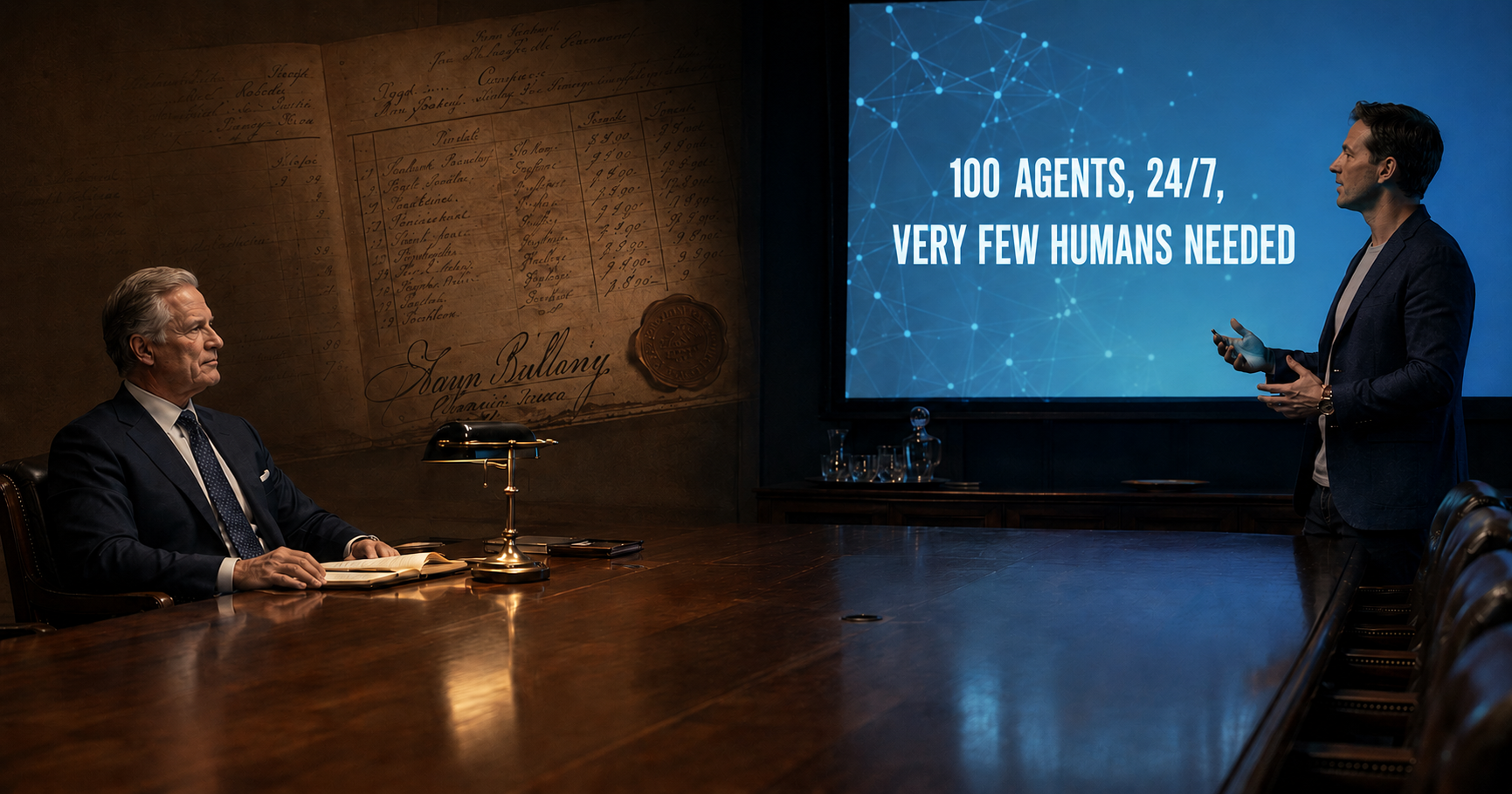
Agentic AI is a governance question wearing a...
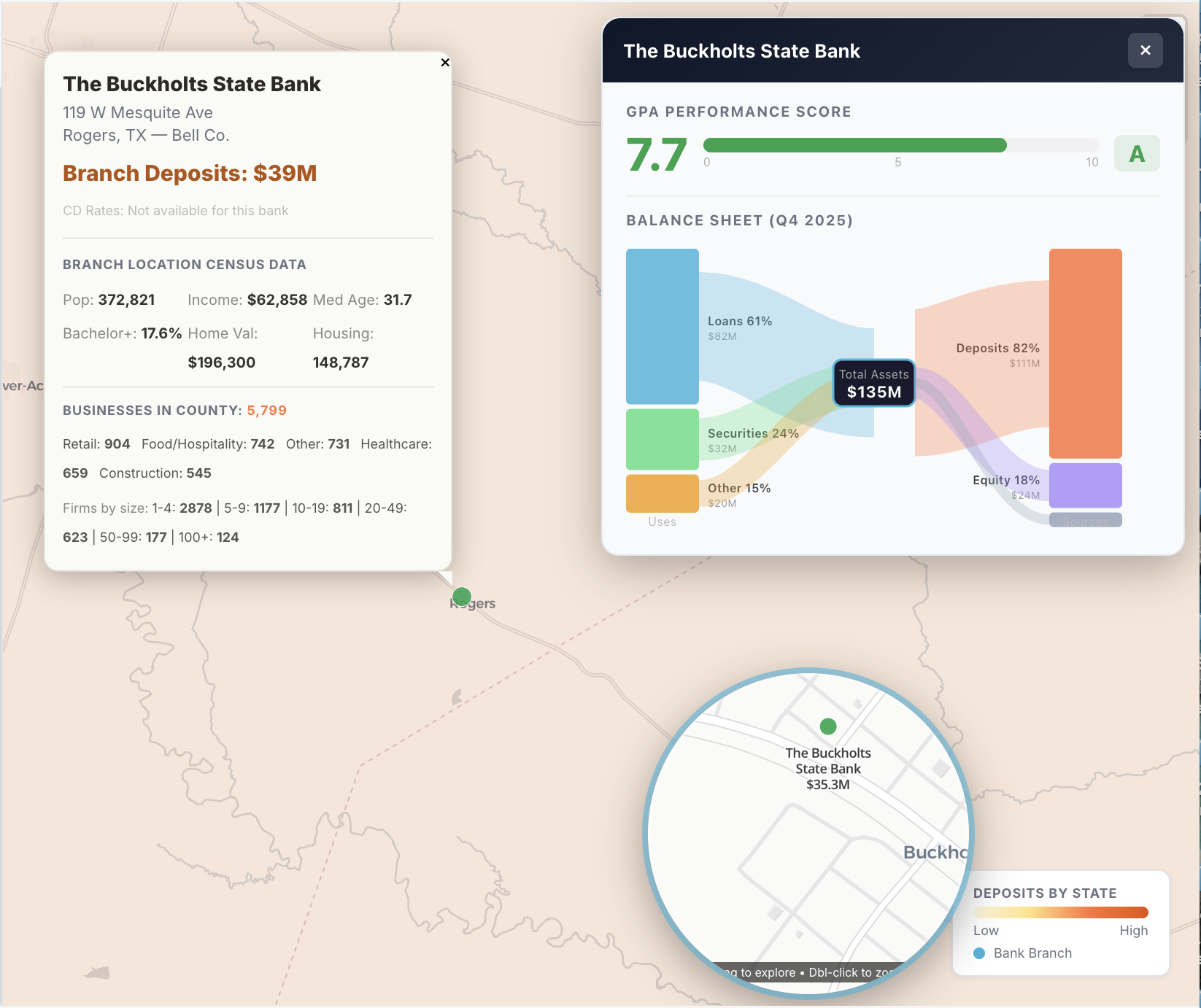
The number 150 has a nice symmetry to it:...